About gum disease treatment
Gum disease begins when plaque builds up along the gumline and the gums become inflamed. In its early stage, gingivitis, it is reversible. If it is not treated it can progress to periodontitis, where the bone and tissue that support the teeth are gradually lost — and it is a leading cause of tooth loss in adults.
It is often painless in the early stages, so the first signs are easy to miss: gums that bleed when you brush, redness or swelling, persistent bad breath, or gums that seem to have pulled away from the teeth. Our registered specialist periodontist treats gum disease at the practice.
Who it can help
- Gums that bleed when brushing or flossing
- Red, swollen or tender gums
- Persistent bad breath or a bad taste
- Gums that have receded, or teeth that feel loose
What happens at your appointment
A thorough gum assessment
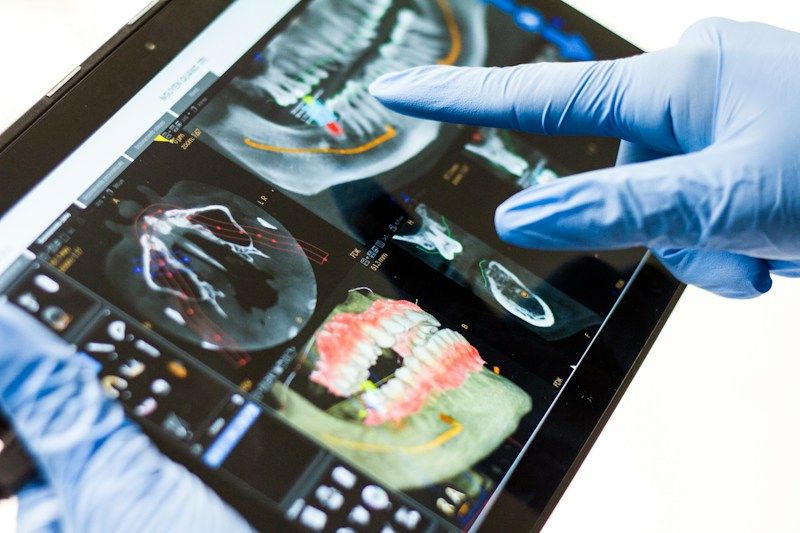
We measure the depth of the gum pockets around each tooth, check for bleeding and look at X-rays to see the bone around the roots.
Explaining what is happening
We tell you what stage the disease has reached, what is causing it, and what you can do at home.
Deep cleaning
Plaque and hardened tartar are removed from above and below the gumline, and the root surfaces are smoothed so the gums can heal. This is often done in stages under local anaesthetic.
Review and maintenance
We re-measure to see how the gums have responded and arrange regular maintenance visits. Gum disease is controlled rather than cured, so ongoing care matters.
Benefits
- Treatment by a registered specialist periodontist on site
- Helps to stop the progress of gum disease and protect the teeth
- Reduces bleeding, swelling and bad breath
- Practical, personal advice for home care
After your treatment
Gums may be tender, and teeth can feel sensitive, for several days. Your gums can look as if they have shrunk as the swelling goes down, which is a sign of improved health. Brush gently but thoroughly, clean between your teeth every day, avoid smoking, and keep every maintenance appointment.
Questions people ask
Can gum disease be cured?
Early gum disease (gingivitis) can be reversed. More advanced disease (periodontitis) can usually be controlled with treatment and good care, but lost bone does not grow back by itself, which is why early treatment matters.
Does it hurt?
Deep cleaning is usually done under local anaesthetic, so you should not feel pain. The gums can be tender for a few days afterwards.
Is gum disease linked to other health problems?
Research has linked gum disease with conditions such as diabetes and heart disease. We encourage you to tell us about your general health and speak to your doctor about it.
Provided by our registered specialist periodontist at Isa Family Dental, 70 Camooweal St, Mount Isa.
This page is general information and is not a substitute for a dental examination. What is right for you depends on your own teeth, gums and health, and we will explain your options before any treatment. As with any health treatment, results and risks vary between people.