About wisdom tooth removal
Wisdom teeth are the last to arrive, usually in the late teens or twenties. Many people have room for them and need nothing done. For others they come through at an angle, only partly emerge, or stay trapped in the jaw — and can then cause pain, repeated infection or damage to the tooth in front.
We assess each wisdom tooth individually. Not every one needs to come out, and we will tell you plainly whether yours do.
Who it can help
- Pain or swelling at the back of the mouth, particularly around a partly erupted tooth
- Repeated gum infections around a wisdom tooth
- A wisdom tooth damaging or decaying the tooth in front
- Teeth that show on an X-ray as impacted or poorly positioned
What happens at your appointment
Assessment and imaging
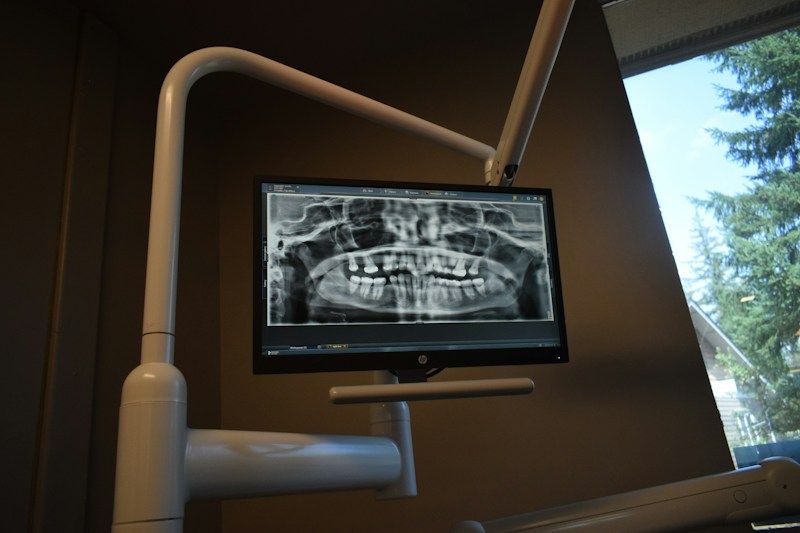
We examine the area and take an X-ray. Where the position of the roots or a nerve matters, cone beam CT gives a three-dimensional view.
Discussing the decision
We explain whether to remove the tooth or monitor it, what removal involves and what to expect afterwards.
Removal
The area is numbed with local anaesthetic. Some teeth come out easily; others need to be sectioned or the gum opened to remove them gently.
Aftercare and review
We place stitches if needed, give you written aftercare instructions, and review how you are healing.
Benefits
- Relieves pain and recurrent infection
- Protects the neighbouring tooth from decay and damage
- Planned using three-dimensional imaging where it will help
- Clear aftercare so you know what to expect
After your treatment
Expect some swelling and tenderness for several days, with the worst usually on the second or third day. Eat soft food, avoid rinsing hard or using a straw on the first day, do not smoke, and keep the area clean as advised. Contact us if pain worsens after day three, if bleeding will not stop, or if you have a fever or a bad taste.
Questions people ask
Do all wisdom teeth need to come out?
No. If they are healthy, fully erupted and easy to clean, they can stay. We remove them when they are causing, or likely to cause, problems.
How long is the recovery?
Many people feel much better within a week, although it varies with how complicated the tooth was. We will give you an idea after we have examined it.
Will I be put to sleep?
Wisdom teeth are commonly removed under local anaesthetic. If you would prefer something different, discuss it with us at your assessment.
Provided by our dentists at Isa Family Dental, 70 Camooweal St, Mount Isa.
This page is general information and is not a substitute for a dental examination. What is right for you depends on your own teeth, gums and health, and we will explain your options before any treatment. As with any health treatment, results and risks vary between people.